Arabic Condolence Cards and Death Notices
Design an Arabic condolence card or death notice with ready words of sympathy, with or without a photo of the deceased, and the times for receiving condolences.
Start designing


Condolence Cards and Death Notices
What wording suits a condolence card?
The most fitting lines are short: they open with a verse or a dua, name the deceased and leave the details to the family. These ready lines, translated from the Arabic, come from the designs in this category:
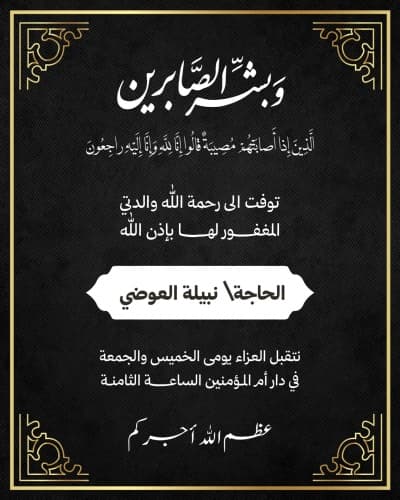
Give good news to the patient, who say when struck by hardship: we belong to God and to Him we return
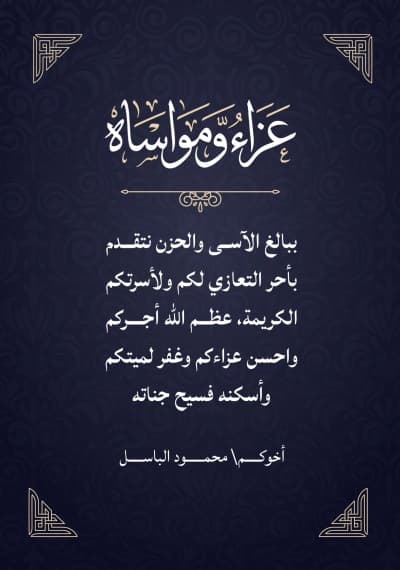
May God magnify your reward, ease your grief and forgive your deceased
With deep sorrow, and in acceptance of God's decree
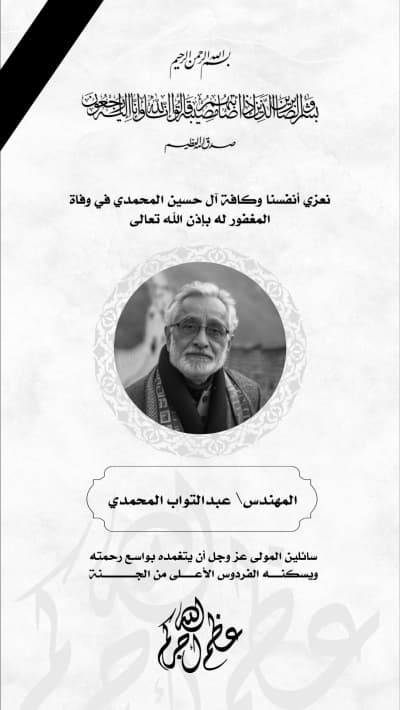
We console ourselves and the whole family of the deceased
We ask God to envelop him in His vast mercy
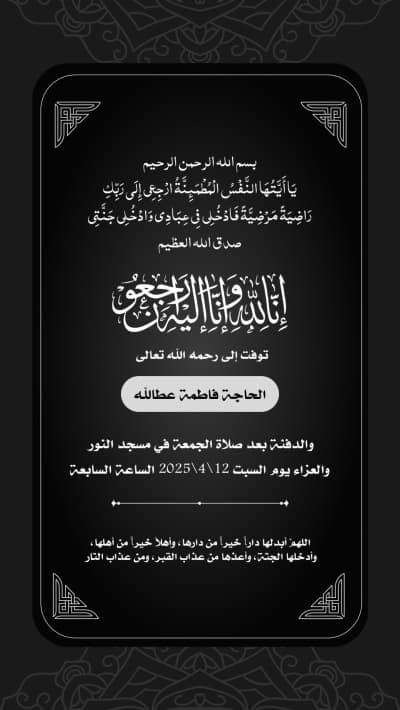
O God, grant him a home better than his home and a family better than his family
O soul at peace, return to your Lord, well pleased and pleasing
May God have mercy on the best man we knew
What will you find in this category?
Death notices with the burial time and the days and place of condolences
Condolences sent in the name of a company or organisation
Condolences on the loss of a father, mother, brother or grandfather
Sympathy cards without a photo to share in group chats
Dark and white designs with gold frames and mourning ribbons
How do you prepare a condolence card?
Open any design on this page in Andalusi, write the name of the deceased and the relationship, and add the condolence times and place if it is a notice. If the family prefers no photo, delete the frame and keep the name and the dua, then export the card.